Chakra Balancing & Aura Cleansing in Bali: What to Know
Chakra balancing and aura cleansing in Bali are gentle, non-invasive energy sessions — typically 60 to 120 minutes — in which a practitioner works through the body's seven traditional energy…
Chakra balancing and aura cleansing in Bali are gentle, non-invasive energy sessions — typically 60 to 120 minutes — in which a practitioner works through the body’s seven traditional energy centers using techniques such as guided breathing, crystal or sound placement, light touch, and visualization, often combined with Balinese purification elements like flower water and melukat-inspired bathing rituals. These sessions are relaxation-focused complementary practices rather than medical treatments, and this guide explains how they work, what a session actually feels like, who they suit, and how to choose a practitioner honestly.
What Are Chakras and Auras in This Context?
The framework used in most Bali sessions comes from Indian yogic tradition: seven principal chakras mapped along the spine — root, sacral, solar plexus, heart, throat, third eye, and crown — each associated with themes such as security, creativity, confidence, connection, expression, insight, and awareness, while the aura is described as a surrounding field of personal energy. Practitioners describe “balancing” as bringing attention and calm to each center in turn, and “cleansing” as clearing what they frame as accumulated heaviness in the field. Whether a visitor treats this literally or as a structured relaxation and reflection framework, the session format is the same — and many guests approach it simply as a guided way to slow down and pay attention to themselves, which requires no belief system at all.
How Do Balinese Traditions Shape These Sessions?
Bali adds something few destinations can: a living purification culture, most visibly melukat — ceremonial water cleansing practiced at springs and water temples across the island. Many Bali energy practitioners weave local elements into chakra and aura work: blessed water and flower petals, offerings prepared before the session, temple-style bathing sequences at spring pools, and sessions timed around Balinese calendar days considered auspicious. A session might therefore combine a chakra-focused table session in a studio with a guided melukat visit the same morning. Visitors joining water purification should follow temple etiquette — sarong and sash, modest behavior, and following the guide’s instructions on the bathing sequence — since these are active religious sites, not spa facilities.
What Happens in a Typical Session?
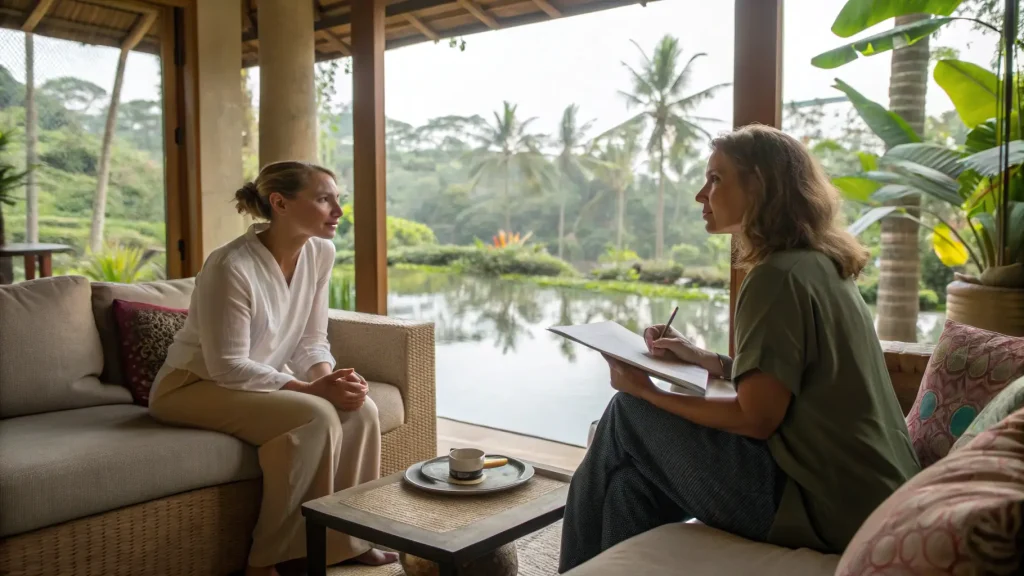
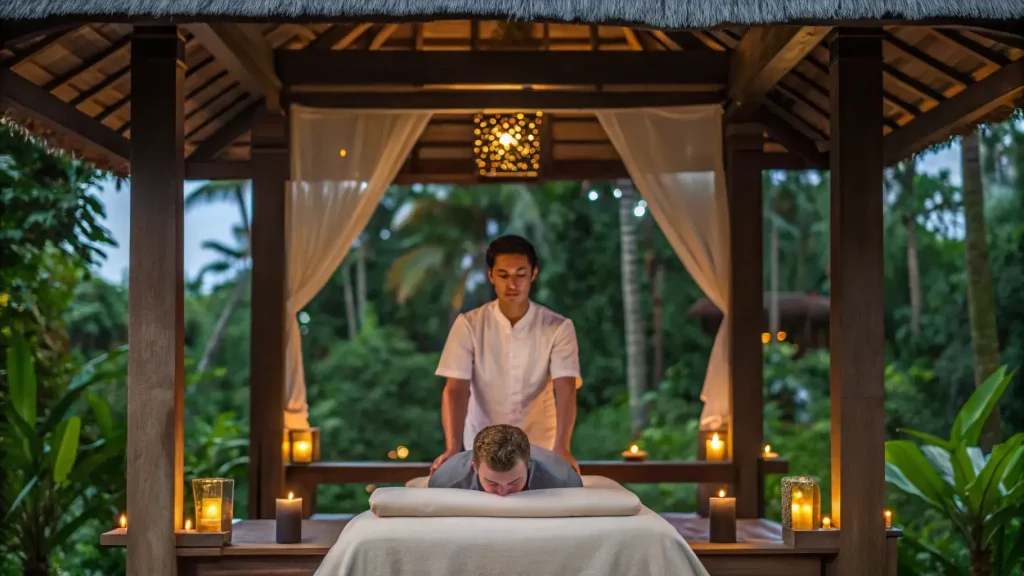
A standard 90-minute chakra balancing session in Ubud follows a predictable arc: a 15-minute conversation about what brings you in, 60 minutes on a massage table fully clothed while the practitioner moves attention through each of the seven centers, and 15 minutes of grounding and discussion afterward. Techniques vary by practitioner but commonly include:
- Light hand placement or hands hovering above the body, similar to Reiki.
- Singing bowls or chimes placed near specific centers.
- Crystals laid on or around the body — decorative and symbolic in function.
- Guided breathing and visualization for each center.
- A closing sweep or “combing” of the aura and a grounding exercise.
Guests commonly report warmth, tingling, vivid imagery, emotional release, or simply deep drowsiness; others feel little beyond rest. Practitioners regard all of these as normal responses, and no reputable session involves removing clothing or any forceful technique.
Who Are These Sessions Best Suited For?
The guests who report the most value from chakra and aura work in Bali fall into three groups: travelers processing a transition — career change, loss, relationship endings — who want structured reflective space; people who find silent meditation difficult and prefer a guided, sensory format; and wellness travelers who want to experience Balinese purification culture respectfully with context explained. It is a poor fit for anyone expecting measurable medical outcomes, and honest practitioners say so. On that point directly: this article is informational, not medical or psychological advice. Energy sessions are complementary practices; anyone managing a physical or mental health condition should continue working with qualified professionals, and practitioners should be told about pregnancy, recent surgery, or trauma history so they can adapt the session’s intensity.
How Much Do Sessions Cost and How Do You Book Well?
As 2027 orientation figures, private chakra balancing or aura cleansing sessions in Ubud, Seminyak, and Sanur are commonly listed between roughly IDR 500,000 and IDR 1,800,000 (about USD 30 to 115) for 60 to 120 minutes, with guided melukat add-ons, senior practitioners, and in-villa visits pricing higher. Vet practitioners the same way you would any unregulated wellness provider: ask about training background and years of practice, request a description of the session start to finish, confirm price and duration in writing, and walk away from anyone promising specific outcomes or diagnosing you with “blockages” that require expensive follow-up packages — the pressure-upsell pattern is the clearest red flag in this field. A curated chakra healing bali package removes the vetting work by fixing the practitioner, inclusions, and pricing before you book.
Should You Book a Single Session or Build It into a Retreat?
A single session works well as a first exposure, but the format deepens noticeably inside a multi-day structure, where energy work sits alongside massage, meditation, and rest instead of being squeezed between sightseeing days — practitioners can also adjust a second session based on how you responded to the first. Travelers who want that continuity without planning each piece separately often choose a bali holistic healing retreat across three days, where chakra work, bodywork, and private sessions are sequenced by design and airport transfers are handled. As a middle path, book one stand-alone session early in your trip; if the format resonates, add a follow-up or step into a short retreat later in the same stay.
Practical Etiquette and Timing Notes
Three practical points smooth the experience: wear loose clothing you can rest in comfortably, since sessions happen fully clothed; schedule nothing intense immediately afterward — late afternoon slots followed by a quiet evening are the popular choice; and if your session includes temple water purification, bring a change of clothes and expect to wear a sarong throughout. Seasonally, sessions run year-round, though guided melukat visits are most comfortable in the April-to-October dry season, and practitioners with small client books fill peak July and August weeks two to four weeks ahead.
Arrange a Session or Package
Bali Holistic Healing Collective connects travelers with experienced chakra and aura practitioners in Ubud, Seminyak, and Sanur, with session formats, pricing, and optional melukat additions confirmed in writing before you book. Message WhatsApp wa.me/6281128590000 or email sales@balipremiumtrip.com with your dates.
Frequently Asked Questions
How long does a chakra balancing session take in Bali?
Most private sessions run 60 to 120 minutes: an opening conversation of about 15 minutes, roughly an hour of table work moving through the seven traditional energy centers, and 15 minutes of grounding and discussion at the end. Sessions that add guided melukat water purification at a spring or temple extend to a half-day experience.
What is the difference between chakra balancing and aura cleansing?
Chakra balancing works through the seven mapped energy centers along the spine one by one, using breath, sound, crystals, or light touch at each point. Aura cleansing addresses the described field around the body as a whole, typically with sweeping motions, flower water, or smoke. Most Bali practitioners combine both in a single session rather than selling them separately.
Do I need to believe in chakras for a session to be worthwhile?
No. Many guests treat the seven-center framework as a structured relaxation and reflection format rather than a literal system, and the session experience — guided breathing, rest, sound, and focused attention — is identical either way. Practitioners in Bali’s main hubs are accustomed to skeptical and curious visitors and do not require any belief commitment.
Are chakra and aura sessions safe, and are they medical treatment?
Sessions are gentle and non-invasive — clients stay fully clothed, and techniques involve light touch, sound, and guided breathing — so physical risk is minimal. They are complementary relaxation practices, not medical or psychological treatment. Anyone managing a health condition, pregnancy, or trauma history should inform the practitioner beforehand and continue care with qualified professionals.
Start Your *Healing* Journey
Tell us your dates, your pace, and what you hope to step away from — we send a written itinerary before any payment is requested.
Leave a Reply