Breathwork & Meditation Retreats in Bali: 2027 Trends
Breathwork and meditation retreats in Bali in 2027 are shifting toward smaller trauma-informed groups, longer integration time between sessions, and hybrid programs that pair conscious connected breathing with silent sitting…
Breathwork and meditation retreats in Bali in 2027 are shifting toward smaller trauma-informed groups, longer integration time between sessions, and hybrid programs that pair conscious connected breathing with silent sitting practice, with Ubud, Canggu, and the Bukit Peninsula hosting most of the new formats. For travelers planning a breathwork retreat in Bali in 2027, the practical takeaway is simple: the strongest programs now publish their facilitator training background, cap group sizes, and screen participants before arrival rather than selling open-door mass sessions.
What Is Changing in Bali Breathwork Retreats for 2027?
The clearest 2027 trend is group size: many established Bali facilitators now cap breathwork circles at roughly 8 to 14 participants, a sharp contrast to the 40-person beachfront sessions that defined earlier years. Smaller circles allow facilitators to watch each participant’s breathing pattern, adjust pacing individually, and hold space when strong emotional releases happen. This matters because conscious connected breathing can bring up intense physical and emotional responses, and a facilitator managing a small room can respond in real time.
Three other shifts define the 2027 season across the island:
- Trauma-informed facilitation is becoming the default language on retreat pages, with pre-retreat questionnaires asking about panic history, recent loss, and medication.
- Integration blocks — journaling, sharing circles, and rest windows after each session — are now scheduled into the timetable instead of being left optional.
- Hybrid formats that alternate active breathwork days with silent meditation days are replacing single-modality intensives, especially in Ubud.
If you want a structured entry point that already follows this format, a curated breathwork retreat bali package combines guided breathing sessions with daily meditation and built-in integration time.
Which Meditation Styles Dominate 2027 Programs?
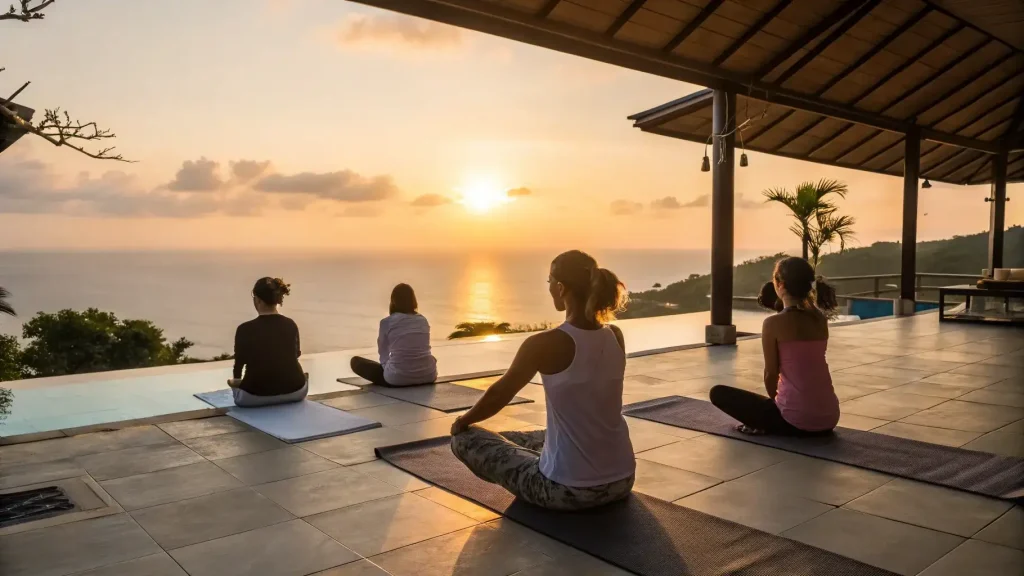
Most Bali retreat timetables in 2027 anchor their mornings around one of four meditation styles: breath-focused samatha, open-awareness vipassana-inspired sitting, guided body-scan practice, and walking meditation through rice-field or jungle paths. Programs rarely teach a single lineage strictly; instead they sequence styles across the week so beginners can discover which approach suits them. Evening sessions increasingly add sound-supported meditation, where singing bowls or gongs accompany a resting practice rather than functioning as a stand-alone performance.
For travelers comparing programs, the useful question is not which style is best but which teaching depth you want. Entry-level retreats explain posture, breath anchoring, and how to work with distraction. Deeper programs assume a daily practice and move into longer unguided sits, noble silence periods, and one-on-one teacher check-ins.
Where Are Bali’s Main Breathwork and Meditation Hubs in 2027?
Ubud remains the densest hub, with the town and its surrounding villages in Gianyar Regency hosting the island’s largest concentration of meditation halls, yoga shalas, and breathwork studios. Canggu and Berawa attract a younger crowd with shorter evening breathwork journeys that fit around surf and coworking schedules. The Bukit Peninsula, including Uluwatu and Bingin, has grown into the premium clifftop retreat zone, while Sidemen and Munduk serve travelers who want quieter mountain settings with minimal nightlife.
Location shapes the experience more than most first-time visitors expect:
- Ubud: widest facilitator choice, jungle setting, easy to combine with healing therapies.
- Canggu: drop-in friendly, social atmosphere, strong for short stays.
- Uluwatu and Bingin: ocean-view venues, premium pricing, popular for intensives.
- Sidemen and Munduk: fewer crowds, cooler air, suited to silent-leaning programs.
How Much Should You Budget for 2027?
As a planning baseline for 2027, single drop-in breathwork sessions in Bali are commonly listed between roughly IDR 250,000 and IDR 600,000, while multi-day residential retreats span a much wider range depending on accommodation tier. The table below summarizes typical published ranges travelers report when comparing options; treat them as orientation figures rather than quotes, since each venue sets its own pricing.
| Format | Typical Duration | Common 2027 Range (per person) |
|---|---|---|
| Drop-in group breathwork class | 60–90 minutes | IDR 250,000–600,000 |
| Private breathwork session | 90–120 minutes | IDR 900,000–2,500,000 |
| Weekend breathwork and meditation retreat | 2–3 days | USD 250–700 |
| Residential retreat, mid-range | 5–7 days | USD 700–1,800 |
| Premium intensive with private sessions | 5–10 days | USD 1,800–4,500+ |
Travelers who want depth rather than breadth often choose a transformational breathwork bali intensive, where the higher price reflects small cohorts, trauma-informed facilitation, and individual follow-up.
Is Breathwork Safe, and Who Should Check First?
Strong conscious breathing changes blood chemistry temporarily — it can cause tingling, light-headedness, and intense emotion — which is why reputable 2027 retreats screen participants before arrival. This article is informational, not medical advice. People who are pregnant or who have cardiovascular conditions, epilepsy, panic disorder, recent surgery, or other significant health concerns should speak with a qualified health professional before joining active breathwork, and should tell the facilitator in advance. Responsible programs will offer gentler alternatives, such as slow coherent breathing or guided meditation, instead of excluding participants outright.
Questions worth asking any retreat before you pay a deposit:
- What training and how many facilitation hours does the lead facilitator have?
- What is the maximum group size, and how many assistants are in the room?
- How do you handle strong emotional releases during a session?
- Is there a pre-retreat health questionnaire and a post-session integration plan?
When Should You Book a 2027 Retreat?
Bali’s dry season from roughly April to October is the busiest retreat window, and small-group breathwork programs in July and August commonly fill six to ten weeks in advance. Because 2027 cohorts are deliberately small, waiting until arrival to book a residential intensive is riskier than it was when large open sessions were the norm. Shoulder months such as May, June, and September usually offer the same programs with easier availability and slightly softer accommodation pricing, while the November to March rainy season suits travelers who prefer quiet venues and do not mind afternoon showers.
Plan Your Bali Breathwork Retreat
Bali Holistic Healing Collective curates breathwork and meditation programs across Ubud, Canggu, and the Bukit, matching travelers with formats that fit their experience level and schedule. Share your dates and goals and the team will respond with suitable options, availability, and clear inclusions. Contact us on WhatsApp at wa.me/6281128590000 or email sales@balipremiumtrip.com.
Frequently Asked Questions
What is the biggest breathwork retreat trend in Bali for 2027?
The defining 2027 trend is small, screened, trauma-informed groups. Many established facilitators now cap circles at roughly 8 to 14 participants, use pre-retreat health questionnaires, and schedule integration time after every session. Large open beachfront sessions still exist, but serious multi-day programs have moved decisively toward smaller cohorts with more individual attention.
How far in advance should I book a Bali breathwork retreat in 2027?
For July and August, book six to ten weeks ahead, because small-group residential programs fill early in Bali’s peak dry season. Shoulder months such as May, June, and September usually have space three to four weeks out, while rainy-season dates from November to March are often available on shorter notice.
Do I need meditation experience before joining a combined retreat?
No prior experience is required for most entry-level programs, which teach posture, breath anchoring, and how to work with distraction from the first morning. Retreats typically sequence several meditation styles across the week, including body-scan and walking meditation, so beginners can find an approach that fits before attempting longer unguided sits.
Who should check with a professional before doing breathwork?
Anyone who is pregnant or has cardiovascular disease, epilepsy, panic disorder, recent surgery, or another significant health condition should consult a qualified health professional before active breathwork, because strong breathing temporarily changes blood chemistry. Reputable Bali retreats screen for these factors in advance and can offer gentler alternatives such as slow coherent breathing.
Start Your *Healing* Journey
Tell us your dates, your pace, and what you hope to step away from — we send a written itinerary before any payment is requested.
Leave a Reply