Sound Healing & Gong Bath in Bali: Complete Beginner Guide
A sound healing session or gong bath in Bali is a fully passive experience in which you lie on a mat, usually for 45 to 90 minutes, while a practitioner…
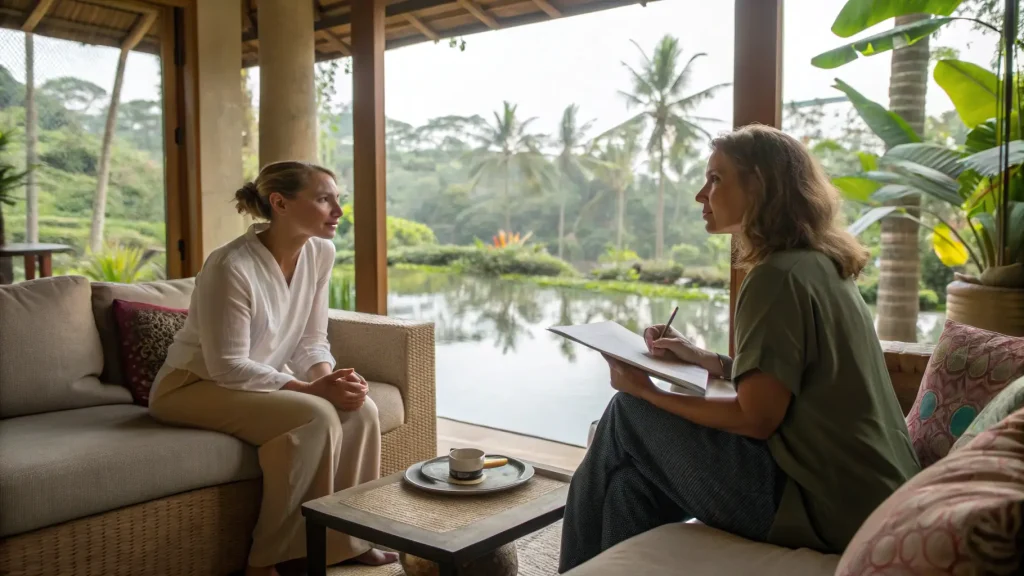
A sound healing session or gong bath in Bali is a fully passive experience in which you lie on a mat, usually for 45 to 90 minutes, while a practitioner plays gongs, Tibetan and crystal singing bowls, chimes, and drums around you, and no experience, movement, or participation is required beyond resting and listening. That passivity is exactly why sound healing has become the most beginner-friendly entry point into Bali’s wellness scene: there is no technique to learn, no physical demand, and no way to do it wrong.
This guide explains what actually happens in a session, the difference between formats and instruments, what first-timers commonly feel, how to prepare, and how to choose between the group circles and private sessions offered across Ubud and the coast.
What Exactly Is a Gong Bath?
The word bath refers to being immersed in sound, not water: participants lie fully clothed on mats, covered with light blankets, while large gongs are played in slow, building waves around the room. A typical gong bath lasts 60 minutes, beginning with a short settling meditation, moving through 40 to 50 minutes of continuous soundscape, and closing with several minutes of silence before participants are gently brought back. Gongs produce dense, overlapping vibrations that many participants describe feeling in the chest and body rather than merely hearing, which is the quality that distinguishes a gong bath from simply listening to relaxing music. Sessions end softly by design; practitioners avoid abrupt endings because participants frequently drift into states between waking and sleep.
Which Instruments Will You Encounter in Bali?
Bali sessions typically blend several instrument families, each with a recognizably different effect:
- Symphonic gongs, the deep immersive core of most sessions
- Tibetan metal singing bowls, warm layered tones often placed near or on the body
- Crystal singing bowls, clear sustained notes many find piercingly calming
- Chimes and bells, bright accents used for transitions
- Frame drums and ocean drums, rhythmic grounding elements
- Voice, humming, or mantra in some practitioners’ styles
No instrument set is objectively best; practitioners build personal styles around their collections. First-timers who want maximum depth generally choose gong-forward sessions, while those sensitive to intense sound often prefer bowl-centered circles, and a quick message to the practitioner about your preference is normal and welcomed.
What Does a Sound Healing Session Feel Like for Beginners?
The most commonly reported first-time experience is a drift into a deeply relaxed, dream-adjacent state within the opening 15 minutes, often with time distortion, where an hour passes in what feels like twenty minutes. Physical sensations include vibration felt in the chest and limbs, heaviness, warmth, and occasionally tingling; emotional responses range from calm and mild euphoria to unexpected tears, all considered ordinary responses to deep relaxation. Some participants simply fall asleep, which practitioners regard as the body taking what it needs rather than a failure. Honest framing matters: these are commonly reported experiences, not guaranteed outcomes, and sound healing is a complementary relaxation practice rather than medical treatment. People with sound sensitivity, and anyone managing a health condition, including pregnancy or epilepsy, should mention it when booking so the practitioner can adapt volume, instruments, and positioning, and should consult a qualified professional where relevant.
Group Circle or Private Session: Which Should a Beginner Book?
Group sound circles, common across Ubud studios, cost the least and carry a communal energy that many travelers enjoy; they run on fixed schedules with anywhere from ten to forty mats. Private sessions cost more but are built around you: the practitioner asks about your state and intention, tailors instrument choice and intensity, places bowls on or near the body where welcome, and times the session to your schedule rather than a studio calendar. Couples and small groups can book privately together, which keeps the tailored format while sharing cost. For a first substantial experience, a tailored sound healing bali private session is the format most beginners are glad they chose, precisely because questions can be asked freely and intensity adjusts in real time. Guests who want sound work woven into a broader stay, alongside spa treatments and energy sessions, will find the luxury healing retreat bali weekend format combines them without separate bookings.
How Should You Prepare for Your First Session?
Preparation is light. Wear loose, comfortable clothing, since you will lie still for up to an hour; eat only lightly in the two hours beforehand, because a full stomach and deep relaxation sit poorly together; and arrive ten minutes early to settle rather than rushing in. Hydrating before and after is standard practitioner advice. Leave perfume off, as scent carries strongly in enclosed sound spaces, and silence your phone completely, since a single notification cuts through a soundscape for the whole room. Afterward, build in a slow half hour: participants often emerge in a soft-edged state, and going straight from a gong bath to scooter traffic wastes the session’s best effect. Evening sessions pair especially well with early nights, and improved sleep that night is among the most commonly reported effects.
Where in Bali Is Sound Healing Strongest, and What Does It Cost?
Ubud is the island’s sound healing capital, with daily group circles across its studio scene and the deepest bench of experienced practitioners, while Canggu, Seminyak, and Uluwatu are well covered for private and in-villa sessions. As indicative 2027 planning ranges, drop-in group circles commonly cost the equivalent of USD 10 to 25, studio private sessions USD 50 to 120 depending on practitioner seniority and duration, and in-villa private sessions for couples or small groups upward of USD 120 with travel included; exact quotes should always be confirmed in writing before booking. Availability for quality private practitioners tightens in July, August, and around the year-end holidays, so travelers in those windows should book sessions before arrival rather than on the ground.
Frequently Asked Questions
Do I need any experience or musical knowledge to join a gong bath?
None at all. Sound healing is fully passive: you lie on a mat, get comfortable under a blanket, and simply listen or drift. There are no postures, techniques, or responses required, which makes it the most accessible session type in Bali’s wellness scene. Falling asleep is common and completely acceptable to practitioners.
How long does a typical session last in Bali?
Group circles usually run 60 minutes, while private sessions range from 45 to 90 minutes depending on the format agreed with the practitioner. Most sessions open with a short settling meditation, hold 40 to 60 minutes of continuous sound, and close with several minutes of silence. Allow extra unhurried time afterward, as participants often emerge deeply relaxed.
Is sound healing safe for everyone?
It is gentle for most people, but volume and vibration are real physical inputs. Anyone who is pregnant, has epilepsy, wears a pacemaker or hearing devices, or has strong sound sensitivity should tell the practitioner when booking so instruments, volume, and positioning can be adapted, and should consult a qualified professional where relevant. It is a complementary relaxation practice, not medical treatment.
What is the difference between Tibetan and crystal singing bowls?
Tibetan bowls are hand-hammered metal alloys producing warm, complex overtones, and practitioners sometimes place them directly on the body so vibration is felt physically. Crystal bowls, made of quartz, produce clearer, sustained single notes that carry powerfully through a room. Most Bali sessions blend both, and neither is better; they simply create noticeably different textures.
Arrange Your First Sound Session
Tell us your dates, where you are staying, and whether you prefer a group circle or a private tailored session, and we will confirm a vetted practitioner with written pricing. Message us on WhatsApp at https://wa.me/6281128590000 or email sales@balipremiumtrip.com.
Start Your *Healing* Journey
Tell us your dates, your pace, and what you hope to step away from — we send a written itinerary before any payment is requested.
Leave a Reply